You don’t need more discipline.
YOU NEED REST!

Break the Pattern Behind Your Emotional Reactions
— Not Just the Symptoms
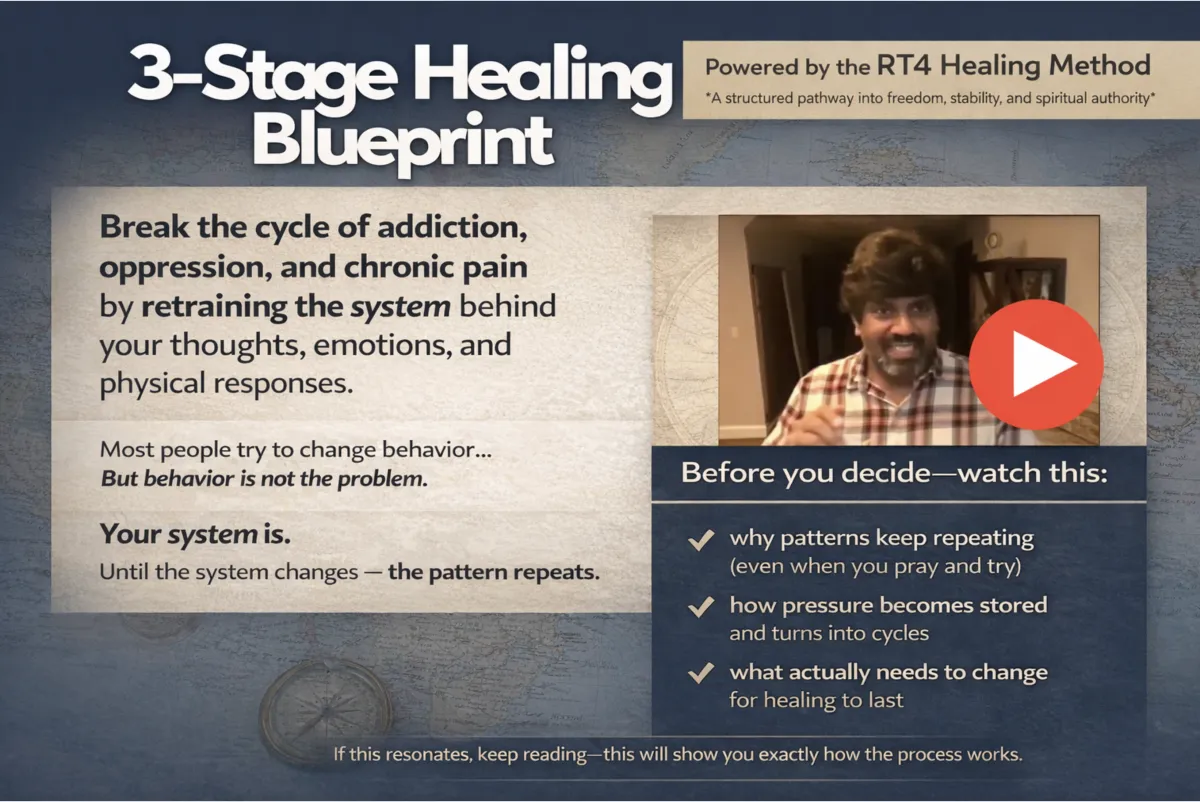
A 3-stage, Scripture-based healing pathway designed to resolve pressure at the root—where memories, emotions, and behaviors intersect.
3-Stage Healing Blueprint
RT4 Healing Method (On-Demand)
A Guided Pathway into Freedom, Stability, and Spiritual Authority
This is not just a course.
It is an invitation into freedom.
If you’ve felt stuck in repeating emotional cycles…
If you’ve prayed for breakthrough but still feel internal pressure…
If you’re tired of managing symptoms instead of resolving them…
This journey was built for you.
Includes 21-Day Guided Journal
For people who are doing their best
— yet still don’t feel free.

Why This Journal Exists
Most people don’t struggle because they lack discipline, faith, or desire.
They struggle because their body learned patterns in seasons of:
Pressure
Responsibility
Urgency
Survival
Those patterns helped once.
But they don’t always turn off when life changes.
The UNLEARN 21-Day Journal helps you slow down and gently notice what’s been running beneath the surface — without trying to fix yourself.
Those patterns helped once.
But they don’t always turn off when life changes.
The UNLEARN 21-Day Journal helps you slow down and gently notice what’s been running beneath the surface — without trying to fix yourself.
This was created to healing to bring healing specifically to Trauma S. (learn more in FAQ).
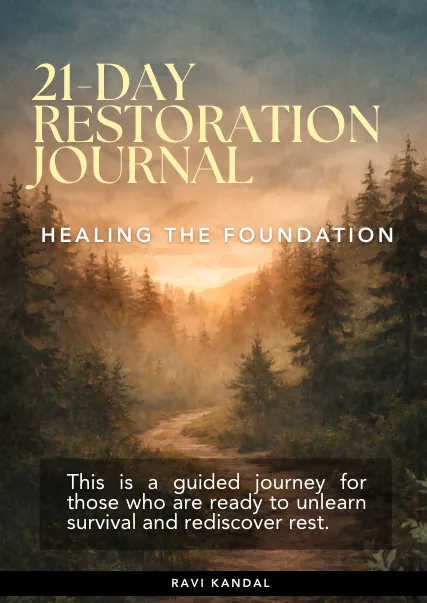
What this 21-Day Journal is:

This is a simple, guided daily journal designed to help you:
Notice patterns that activate automatically interrupt
Interrupt pressure-based responses with gentleness
Reconnect obedience to rest instead of striving
Experience more internal choice and calm
Each day includes:
One short reflection (10–15 minutes)
Scripture-based prompts
space to listen, not perform
No labels.
No diagnosis.
No emotional overload.
Real Stories of Restoration
What People Are Experiencing
As people slow down, practice God's presence, and allow Him to restore their hearts, they begin to notice peace, clarity, and new patterns forming in everyday life.
I Finally Felt Safe
“I began the Arrival Lesson and immediately felt my body relax. I felt safe. I was more present than I had been in a long time. As I practiced God's presence, I experienced peace, comfort, and emotional healing.”
Peace Replaced My Need to Defend Myself
“I no longer feel the need to express or defend a part of myself that I thought was attached to righteousness. I now realize it was actually a defense mechanism. Peace has replaced that burden.”
I'm Responding Instead of Reacting
“I am seeing a difference in my responses—more calm, thinking first instead of reacting. The Scriptures throughout the journal continually bring Jesus close.”
I Don't Feel Responsible to Fix Everyone
“I can now listen to people without feeling responsible to fix them, correct them, or offer solutions. I have compassion and empathy without carrying the weight of responsibility.”
Rest Is Something My Heart Can Relearn
“I realized that rest isn't something to achieve—it's something the body and heart relearn together. Instead of trying to figure everything out, I'm learning to invite Jesus into every situation.”
I Feel at Home in God's Presence
“When I imagine God near, everything becomes still. Practicing His presence has renewed my mind, softened my heart, and brought comfort where I once carried tension.”
Healing is the foundation. Restoration is the journey. Freedom is the fruit.
More About the Journal
Twenty-one days allows new awareness to settle — without force or pressure — so your system can experience something different.
This isn’t about intensity.
It’s about creating space.

What This Journal Is Not
This is not:
Therapy
Self-Improvement
Behavior Management
Emotional Excavation
This journal doesn’t ask you to fix yourself. It helps you unlearn what your body learned when it had to cope.

Why 21 Days?
Because lasting change doesn’t happen through insight alone.
The body changes through:
Rhythm
Repetition
Safety
Consistency

What You’ll Receive
When you sign up, you’ll receive:
A digital 21-day guided journal
Scripture-based reflections grounded in rest
Gentle reminders to support consistency
Teaching that takes the journal deeper
Homework and activities to support your healing journey
Frequently Asked Questions

What is Trauma S?
Type S Trauma is slow, subtle, and systemic.
It is not defined by a single overwhelming event, but by what the body learned over time in environments where safety, attunement, or consistency were missing.
Type S trauma forms when the nervous system adapts to chronic emotional conditions, such as:
*Emotional neglect (needs not noticed or responded to)
*Inconsistent caregiving
*Being valued for performance rather than presence
*Chronic misattunement (caregivers present but not emotionally available)
*Parentification (having to be “the strong one”)
*Growing up in calm-looking but emotionally unsafe homes
*Love that was conditional, unpredictable, or withdrawn
This trauma is often unrecognized because:
*“Nothing bad happened”
*There was no obvious abuse
*Others had it worse
*The environment looked stable from the outside
Yet the body learned powerful survival lessons.
How Type S Shapes the Nervous System
The nervous system learns:
*“I must not need too much.”
*“I should not disrupt others.”
*“Connection requires self-control.”
*“Rest is unsafe.”
“*Being myself may cost me belonging.”
This often results in:
*Chronic self-monitoring
*Emotional suppression
*Freeze or collapse responses
*People-pleasing or over-functioning
*Difficulty receiving care
*A sense of emptiness or disconnection
*Feeling “fine” but not alive
Type S trauma produces quiet symptoms.
The body adapts by disappearing rather than reacting.
What does healing from Type S trauma look like—and why does this journal focus on it?
Healing Type S trauma is not primarily about reliving the past. It is about helping the body learn new experiences of safety, connection, and permission—because Type S patterns were formed slowly over time.
This 21-day journal addresses Type S healing because it offers what the nervous system needs to change: small daily repetition, emotional safety, and choice. Instead of forcing breakthroughs, it supports consistent, gentle “updates” that teach the body: I can be present, have needs, and take up space—and still be safe.
Common signs of healing include:
Relearning safety in the body: calm may feel unfamiliar at first; restlessness or guilt can show up as the body adjusts.
Allowing needs without shame: noticing needs earlier, expressing boundaries more simply, receiving without over-explaining.
Reconnecting to aliveness: more access to joy, anger, desire, creativity, and a sense of real presence.
Shifting from function to being: less performing for love; more permission to be known, helped, and supported.
A key distinction: Type S healing cannot be rushed or performed. This journal is designed to keep the pace gentle, consent-based, and steady—so growth does not recreate the original pattern.
What Can I Expect as I Heal Type S Trauma Through This Journal?
Healing Type S trauma is usually quiet and gradual. Because these patterns formed slowly over time, change often happens in small, steady shifts rather than dramatic emotional moments.
Here is what many people notice first:
1. You May Feel More Before You Feel Better
As you slow down, you might notice:
- Restlessness or mild anxiety
- Guilt when resting or not “doing enough”
- Emotions that were previously muted
- This doesn’t mean something is wrong.
- It often means your body is beginning to feel safe enough to notice what was once ignored.
2. You May Start Noticing Your Needs More Clearly
You might begin to:
- Recognize needs sooner instead of pushing through
- Feel awkward or unsure about asking for support
- Want more honesty and less over-explaining
- This can feel unfamiliar at first because Type S trauma often taught the body that needing is unsafe.
3. Small Moments of Aliveness May Return
Over time, you may notice:
- Subtle pleasure or relief
- Moments of curiosity, creativity, or emotion
- A sense of being more present in your own life
- These shifts are often gentle—not dramatic—and they tend to grow with consistency.
4. Change May Feel Slower Than You Expect—and That’s Normal
This journal is designed to work with your nervous system, not against it. You do not need to push, perform, or “do it right.”
Healing Type S trauma happens through:
- Repetition, not intensity
- Safety, not pressure
- Choice, not forcing
If the process feels steady, quiet, or even a little confusing at times, that is often a sign it is working.
A Final Reassurance
You are not behind.
You are not doing this wrong.
Your body is learning something new—at a pace it can trust.